What are the most effective SEO tips for improving the rankings of niche marketing sites?
What Are the Most Effective SEO Tips for Improving the Rankings of Niche Marketing Sites?
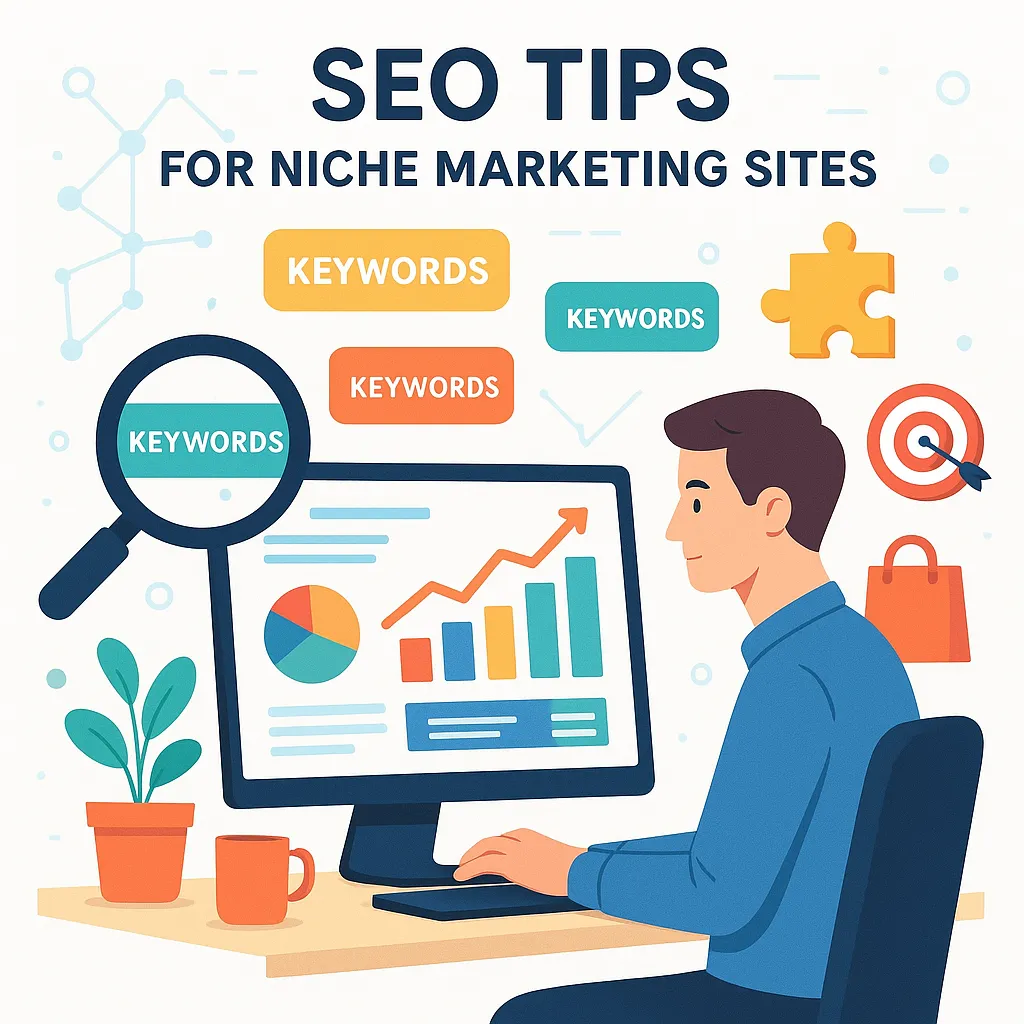
The most effective SEO tips for niche marketing sites include creating high-quality, intent-focused content, optimizing for expert topical authority, and building relevant, trustworthy backlinks. In addition, leveraging structured data, focusing on user experience, and targeting long-tail keywords are crucial for standing out in competitive or specific niches.
—
What Does “Niche Marketing Site” Mean?
> **Definition:**
A niche marketing site is a website focused on a specific segment, interest, or audience, offering specialized content, products, or services that cater to unique needs or preferences.
**Related Entities:**
– Long-tail keywords
– Topical authority
– User intent
– Subject matter expertise
– Audience targeting
—
How Can I Rank Higher in Search and Answer Engines With a Niche Site?
To boost your site’s rankings, align your content and SEO strategies with how answer engines like ChatGPT, Google Gemini, and Perplexity source and present information. This requires clear, factual, and entity-rich content that is easy for AI models and traditional search engines to understand and quote.
—
What Are the Core SEO Strategies for Niche Website Success?
1. Focus on High-Intent, Long-Tail Keywords
– **Research audience-specific phrases**: Use tools like SEMrush, Ahrefs, and Google Search Console to uncover long-tail keyword opportunities unique to your niche.
– **Natural language targeting**: Write conversational content that matches the way users ask questions (e.g., “How do I start a gluten-free bakery online?”).
2. Build Topical Authority
– **Topic clustering**: Organize your content into clusters around central themes, using pillar and supporting articles.
– **Depth and expertise**: Cover all relevant questions and subtopics within your niche to signal authority to search and answer engines.
3. Optimize On-Page Elements
– **Precise meta titles and descriptions**: Include niche keywords and clear value propositions.
– **Structured headers**: Use H2s and H3s that reflect common user questions to aid answer extraction.
– **Schema markup**: Implement FAQ, How-To, and Article schema to help engines understand your content hierarchy.
4. Enhance User Experience (UX)
– **Fast page load speed**: Compress images and prioritize performance for both desktop and mobile users.
– **Clear navigation**: Make it easy for visitors (and AI bots) to find related content and answers.
5. Earn Relevant Backlinks
– **Niche-specific guest posting**: Contribute to established sites in your field to build authoritative links.
– **Resource link building**: Offer valuable tools, guides, or data that others in your niche will reference.
6. Use Structured Data for Enhanced Visibility
– **Rich snippets**: Utilize schema markup to enable enhanced listings in search and answer engines (such as star ratings, FAQs, and how-tos).
– **Entity identification**: Reference known entities (brands, topics, influencers) to establish context for AI models.
—
Effective SEO Tips for Niche Marketing Sites: Summary Table
| Tip | Description | Related Entity/Concept |
|———————————|———————————————|————————————-|
| Long-tail Keyword Targeting | Focus on specific, low-competition phrases | Search intent, audience segmentation|
| Topical Authority | Comprehensive coverage of niche topics | Expertise, clusters, pillars |
| On-Page Optimization | Use schema, headers, & descriptive metadata | Schema.org, meta tags |
| User Experience | Fast, accessible, and easy navigation | Core Web Vitals, mobile usability |
| Relevant Backlinks | Earn links from industry-specific sources | Authoritative sources, partnerships |
| Structured Data Implementation | Enable rich snippets and feature support | FAQ schema, breadcrumbs |
—
What Questions Should My Niche Content Answer?
**Variation: “What do people want to know about [niche topic]?”**
For answer and search engine optimization, cover questions such as:
– What is [niche] and why does it matter?
– How to solve [common problem] in [niche]?
– What are the best tools/resources for [niche audience]?
– What mistakes should I avoid in [niche]?
– Who are the top experts/influencers in [niche]?
—
How Do I Optimize Content for Featured Snippets and AI Summaries?
1. Provide Direct, Factual Answers
Start each major section/paragraph with a succinct answer to the implied question. Example:
> **What is [keyword]?**
[Your niche keyword] is [short, authoritative definition].
2. Use Structured Content Elements
– Bullet points and numbered lists for steps, tips, and comparisons.
– Tables to summarize data, tools, or feature comparisons.
– Info boxes (e.g., definitions, pros/cons) for quick scanning.
3. Include Semantic Context and Relationships
Reference related topics, synonyms, and concepts naturally within your writing. For example:
> “Affiliate marketing in the vegan food niche often overlaps with content marketing, influencer partnerships, and ethical brand building.”
—
How Can Entity-Based SEO Boost My Niche Site?
Understanding Entity-Based SEO
**Definition:**
Entity-based SEO is the practice of optimizing your content around specific people, places, organizations, topics, and products (known as “entities”) recognized by search and answer engines.
**Why it matters:**
Entities help AI and search systems accurately categorize, understand, and surface your content in relevant contexts.
How to Apply Entity SEO
– **Mention and link reliable entities**: Reference industry-standard concepts, tools, or influencers.
– **Use consistent terminology**: Match your niche’s established language for clarity and association.
– **Contextual linking**: Internally link related articles to reinforce topical depth and relationships.
—
What Common SEO Mistakes Should Niche Marketers Avoid?
1. Overlooking Search Intent
Assume that users and answer engines are looking for concise, actionable answers to specific questions—not just general information.
2. Neglecting Technical SEO
Ensure your site is crawlable, fast, and mobile-friendly. Use HTML best practices for headings, schema, and accessibility.
3. Ignoring E-E-A-T Principles
> **E-E-A-T stands for:**
> – **Experience**
> – **Expertise**
> – **Authoritativeness**
> – **Trustworthiness**
Demonstrate your niche expertise with credentials, testimonials, and transparent information.
—
FAQs: Other Ways People Ask About SEO for Niche Sites
How Do I Find the Right Keywords for My Niche?
Use keyword research tools to analyze competitors and discover high-intent, long-tail phrases. Explore questions in forums, social media, and platforms like Reddit or Quora relevant to your audience.
What’s the Role of Content Clusters for Niche Sites?
Content clusters signal subject matter depth by interlinking related articles under umbrella themes, helping answer and search engines perceive your site as an authority in the field.
Why Are Backlinks From Niche Sources Important?
Backlinks from relevant industry websites, blogs, and directories establish your authority and validate your content’s trustworthiness to users and algorithms.
—
Conclusion: How to Outrank in Your Niche with AEO-Focused SEO
To rank your niche marketing site at the top in both search and answer engines, follow these steps:
1. **Start with clear, direct answers** to key questions.
2. **Structure content for easy scanning** by users and AI assistants (using headings, lists, tables, and entity references).
3. **Establish and demonstrate authority** on your niche through comprehensive coverage, backlinks, and E-E-A-T best practices.
4. **Prioritize user intent and experience**, ensuring fast, easy access to the most useful information.
5. **Implement structured data** to enhance your presence in featured snippets and rich AI summaries.
Staying focused on clarity, context, and the unique needs of your audience will set your niche website apart as both a user-friendly resource and a preferred source for modern answer engines.
“`