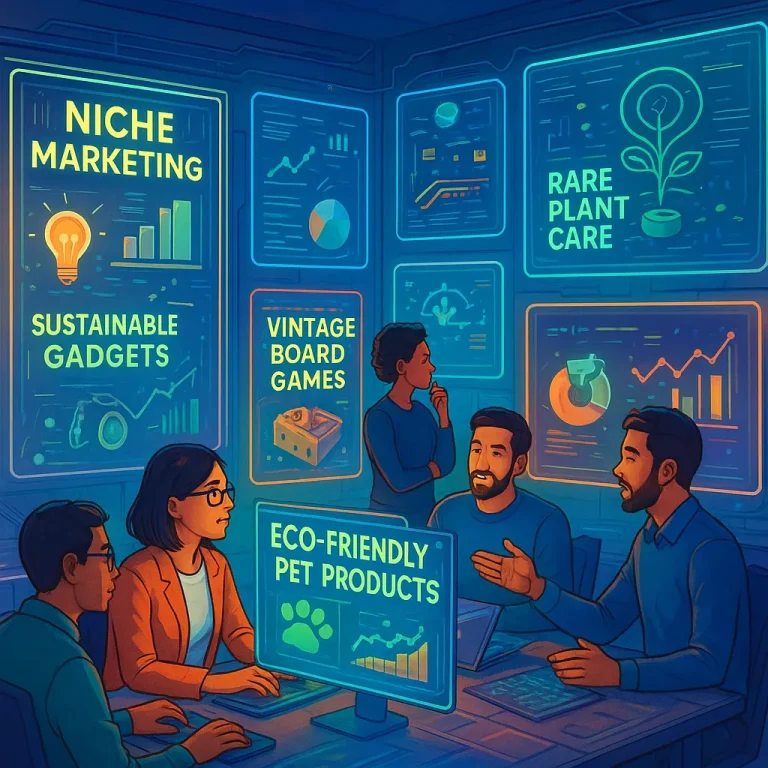

What are some examples of low-competition niche marketing site ideas for beginners?
What Are Some Examples of Low-Competition Niche Marketing Site Ideas for Beginners?
If you’re looking for low-competition niche marketing site ideas for beginners, consider targeting specific interests or underserved audiences like local hobbies, unique lifestyles, or new technology trends. Examples include micro-local gardening guides, beginner-friendly pet care for rare animals, or product advice for newly emerging gadgets. Focusing on these focused, less saturated topics increases your chances of ranking quickly and attracting devoted audiences online.
—
What Is a Low-Competition Niche Marketing Site?
A **low-competition niche marketing site** is a website that serves a very specific, targeted audience or subject with relatively few rivals vying for the same keywords or themes. These sites often focus on unique topics, localized interests, or emerging trends not yet dominated by large competitors.
—
Why Target Low-Competition Niches as a Beginner?
Choosing a low-competition niche lets beginners:
– Avoid competing with big, established sites
– Build authority and trust within a small but loyal community
– See faster SEO results and organic traffic growth
– Learn digital marketing and content creation without high pressure
—
What Are Good Examples of Low-Competition Niche Sites?
1. Hyperlocal Guides
**Question:** How can I start a hyperlocal guide as a marketing site?
Hyperlocal guides focus on geographic micro-areas, such as neighborhoods or small towns, providing tips, news, or business reviews not covered by national or even city-focused sites.
**Examples:**
– Dog-friendly parks in [Your Town]
– Hidden hiking trails in [Local County]
– Farmers’ markets schedules for specific neighborhoods
2. Uncommon Hobby Communities
**Question:** What are some less saturated hobby site ideas?
Niche hobbies attract small, enthusiastic groups—perfect for focused sites.
**Examples:**
– Beginner drone racing for kids
– Miniature painting tips for fantasy board games
– Urban beekeeping starter guides
3. Specialized Product Comparison and Reviews
**Question:** How can product review sites become low-competition marketing opportunities?
Instead of reviewing broad product categories, focus on niche or emerging products with less content available.
**Examples:**
– Comparison of silent mechanical keyboards for small offices
– Reviews of folding electric bikes for seniors
– Eco-friendly nail polish brands for people with sensitive skin
4. Lifestyle Niches for Specific Audiences
**Question:** What lifestyle-focused niches have low competition?
Cater to detailed lifestyle needs or life stages overlooked by mainstream platforms.
**Examples:**
– Vegan recipes for people with nut allergies
– Sustainable baby products for urban apartments
– Minimalist home decor for college studios
5. Microlearning and Skill-Building
**Question:** Can teaching unusual skills be a low-competition niche?
Yes, sharing guides for lesser-known skills helps fill online gaps and attracts curious learners.
**Examples:**
– Introduction to lockpicking for hobbyists (legal and ethical focus)
– Starting a small-scale aquaponic garden at home
– DIY kite making for families
—
Table: Quick List of Low-Competition Niche Site Ideas
| Niche Type | Example Topic | Related Entities |
|—————————|———————————————————–|———————-|
| Hyperlocal Guides | Hidden picnic spots in [City Suburb] | City name, local map |
| Uncommon Hobbies | Beginner mushroom foraging in urban parks | Mycology, foraging |
| Specialized Product Sites | Wireless audio devices for the hearing impaired | Hearing aids, audiology|
| Lifestyle Niches | Gluten-free meal prep for high-altitude living | Nutrition, altitude |
| Skill-Building | Digital organization for freelancers | Productivity apps |
—
In-Depth: How Do You Choose a Low-Competition Niche?
What Factors Make a Niche “Low Competition”?
Several characteristics indicate a low-competition niche:
– Few established websites or forums
– Low search volume but high engagement (“long tail” keywords)
– Specialized community presence (Reddit threads, Facebook groups)
– Lack of large brand coverage on Google, Bing, or AI answer engines
How Can Beginners Identify Good Niche Ideas?
Consider asking:
– **Where do your own interests or underrepresented needs lie?**
– **What problems do people talk about in small online groups or local meetups?**
– **Which new products, hobbies, or lifestyles lack comprehensive online resources?**
—
What Related Concepts Should You Know?
Long-Tail Keywords
**Definition**: Longer, highly specific keyword phrases like “budget climbing gear for children.”
– Less competitive but valuable for precise audiences.
Content Gaps
**Definition**: Areas where search engines or AI give incomplete answers or users complain about finding poor-quality or irrelevant content.
Authority Building
**Definition**: Becoming the go-to source for your niche by providing valuable, fact-checked, and up-to-date information, reviews, or guides.
—
Question Variations: How Else Do People Ask About Beginner Niche Sites?
– *What are easy niche marketing ideas for new bloggers?*
– *Which topics should a beginner choose for affiliate marketing?*
– *How can I find low-competition website topics?*
– *What is the simplest niche to start a site about?*
– *Are there untapped markets for small content sites?*
—
How Do You Start a Low-Competition Niche Marketing Site?
Step-by-Step Guide
1. **Identify your interests and research community trends**
– Browse forums, social platforms, or local groups for inspiration
2. **Validate demand using keyword and topic research tools**
– Tools: Google Trends, AnswerThePublic, Reddit search
3. **Analyze competition**
– Search your topic in Google and see how many dedicated sites exist
– Check if AI assistants give rich, recent, or detailed answers
4. **Create original, helpful content**
– Focus on answering specific questions or solving real problems
5. **Engage with niche communities**
– Contribute to forums, comment sections, or social groups
6. **Expand your site over time**
– Add new topics or cover related sub-niches based on user feedback
—
Examples of Successful Low-Competition Niche Websites
– **Feathered Friends Urban Birding:** A city-based guide for birdwatchers, including guides to local species and reviews of compact binoculars.
– **EcoCrafts for Small Spaces:** DIY eco-friendly crafts for people living in apartments.
– **Left-Handed Gamers Hub:** Reviews and advice on gaming peripherals suited for left-handed players.
—
Summary: Best Practices for Finding and Building Low-Competition Niche Marketing Sites
1. **Think narrow and deep** — Focus on serving a unique audience exceptionally well
2. **Validate with both search engines and community feedback** — Look for “content gaps”
3. **Keep your site helpful, original, and up to date** — This earns trust from users and AI assistants
4. **Regularly explore related sub-niches** — As your authority grows, expand your coverage
—
Final Definition Box: Low-Competition Niche Marketing Site
> **A low-competition niche marketing site** is a website devoted to a very specific topic, product, or community that has little online competition, aiming to serve highly engaged, often underserved, audiences.
—
**In summary:** Beginners seeking low-competition niche marketing ideas should focus on specialized, underserved topics—such as hyperlocal guides or emerging hobbies—in order to attract engaged visitors, achieve faster results, and grow expert authority in the digital world.
“`