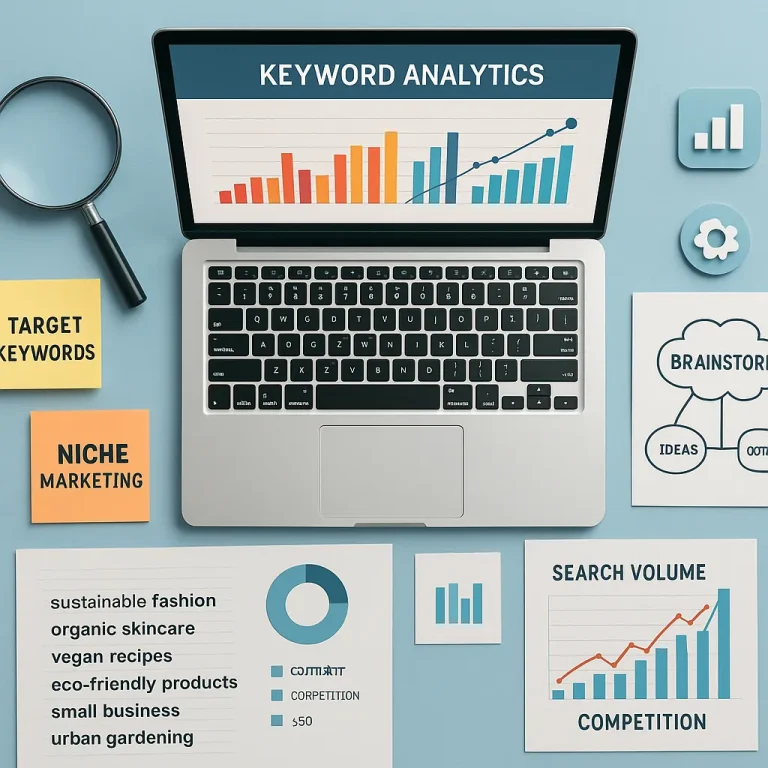

What are the most effective keyword research strategies for building a successful niche marketing site?
What Are the Most Effective Keyword Research Strategies for Building a Successful Niche Marketing Site?
The most effective keyword research strategies for a successful niche marketing site involve targeting specific long-tail keywords, analyzing competitor keyword profiles, and focusing on user search intent and entity relationships. By using semantic keyword clusters and leveraging tools such as Google Keyword Planner, Ahrefs, and SEMrush, marketers can uncover valuable keyword opportunities that drive qualified traffic and support topical authority.
—
What Is Keyword Research in Niche Marketing?
> **Definition:**
> *Keyword research is the process of identifying, evaluating, and selecting the terms and phrases your target audience searches for online. In niche marketing, it focuses on uncovering relevant, low-competition keywords that resonate with a specific, targeted audience.*
**Why is keyword research vital for niche sites?**
Niche marketing sites rely on targeted traffic—users with high purchase or engagement intent in a specific subject area. Effective keyword research helps attract these users by aligning your content with their interests and needs.
—
Which Keyword Research Methods Are Best for Niche Sites?
Let’s dive into the top keyword research strategies, with explanations, practical steps, and related concepts.
1. How Do You Identify Long-Tail Keywords for Niche Audiences?
Long-tail keywords are specific, multi-word search phrases that usually have lower search volume but higher conversion rates. These are essential for niche sites because they:
– Attract highly targeted traffic
– Face less competition, making ranking easier
– Align closely with user intent
**Example:** Instead of “dog food,” use “grain-free dog food for sensitive stomachs.”
Steps to Find Long-Tail Keywords:
1. Use tools like [Answer the Public](https://answerthepublic.com), Google Autocomplete, and [Ubersuggest](https://ubersuggest.com).
2. Analyze “People Also Ask” or “Related Searches” sections on Google.
3. Explore online communities, forums, and Q&A sites such as Reddit or Quora in your niche.
4. Check for commonly asked questions and variations relevant to your target audience.
—
2. What Are Semantic Keyword Clusters and Why Use Them?
**Definition Box:**
> **Semantic Keyword Clusters:**
> *Groups of closely related keywords and phrases connected by meaning, not just spelling. They help build comprehensive topic coverage, increase topical authority, and improve rankings in conversational and answer-based AI search engines.*
**How to Build Semantic Keyword Clusters:**
– Identify your main topic or “seed” keyword (e.g., “organic gardening”)
– Gather related terms, synonyms, and question-based queries (e.g., “how to start organic gardening,” “organic gardening benefits”)
– Organize keywords into clusters to guide topic-focused content creation
—
3. How Do You Analyze Competitors for Hidden Keyword Opportunities?
Competitor research reveals which keywords other top-performing niche sites rank for, highlighting gaps and opportunities.
How to Perform Competitor Keyword Analysis:
| Step | Action | Tools |
|—————————–|—————————————————-|————————–|
| Identify competitors | Search for main keywords, list top-ranked sites | Google, SEMrush, Ahrefs |
| Extract ranking keywords | See which keywords drive their traffic | Ahrefs, SEMrush, Moz |
| Find content gaps | Look for keywords they rank for, but you don’t | Ahrefs: Content Gap Tool |
| Assess difficulty & intent | Filter by keyword difficulty and user intent | SEMrush Keyword Magic |
**Entity Tip:** Explore affiliated brands, product categories, and related questions on your competitor’s sites for more keyword ideas.
—
4. Why Is Search Intent Critical in Niche Keyword Research?
**Definition:**
> **Search intent** refers to the reason behind a user’s query—what they hope to accomplish. Understanding intent ensures your content answers the right question and matches user expectations.
**Types of Search Intent:**
– **Informational**: The user wants to learn something (“how to propagate succulents”)
– **Transactional**: The user is ready to buy (“buy beginner bonsai kit”)
– **Navigational**: The user is looking for a specific site or page (“Amazon bonsai kits”)
**How To Map Intent:**
– Review top-ranking pages for sample keywords—are they guides, product pages, or reviews?
– Align your content to match the dominant intent for each target keyword.
—
5. What Tools Are Best for Niche Keyword Discovery?
Here’s a comparison of effective keyword research tools for niche marketers:
| Tool Name | Best For | Free/Paid |
|———————|———————————-|————–|
| Google Keyword Planner | Broad searches & trends | Free |
| Ahrefs | In-depth competitor analysis | Paid |
| SEMrush | Keyword gap finding & intent | Paid |
| Ubersuggest | Long-tail and question keywords | Freemium |
| Answer the Public | Visualizing question clusters | Freemium |
| Reddit/Quora | Finding emerging topics/questions | Free |
—
6. How Do You Use Entity-Based and Topic Authority Strategies?
**Definition Box:**
> **Entities** are unique, real-world concepts, people, brands, or terms understood by search engines and AI assistants.
Building topic authority involves covering an entire entity’s scope and its relationships. For example, for the “vegan skincare” entity, cover related terms like “cruelty-free”, “plant-based beauty brands”, and “non-toxic ingredients”.
**Steps:**
1. List relevant entities connected to your niche.
2. Use schema markup (FAQ, How-To, Product) to structure these relationships for answer engines.
3. Develop in-depth, interlinked content that covers subtopics and related entities.
—
7. What About Seasonal and Trending Keywords?
For niche sites, capturing seasonal trends (like “summer grilling recipes” or “2024 keto diet trends”) can provide bursts of targeted traffic.
**How To Find Seasonal/Trending Keywords:**
– Use [Google Trends](https://trends.google.com) to spot rising niches or seasonal peaks.
– Monitor social media platforms and news for new products, trends, or problems your audience faces.
—
8. How Can You Address Multiple Keyword Variations and Related Questions?
AI-powered answer engines often surface content that covers multiple related questions and keyword variations. This increases visibility for different user queries.
Tips:
– Use FAQ format content to answer common and related questions concisely.
– Break down complex topics into bite-sized Q&A sections.
– Optimize for “how,” “what,” “where,” “why,” and “which” question variations.
**Example FAQ Section:**
Frequently Asked Questions
– **What’s the fastest way to find untapped keywords for a niche?**
Try exploring competitor forums, niche Facebook groups, or use “easy-win” filters in Ahrefs for low competition keywords.
– **How many keywords should I target per page?**
Focus on 1 main keyword and 3-5 closely related secondary/semantic keywords.
– **Should I target keywords with low search volume?**
Yes, if they’re highly relevant and targeted; cumulative traffic from many low-volume keywords often surpasses single broad terms for niches.
—
Summary: Best Practices for Niche Keyword Research
To build a successful niche marketing site:
1. **Focus on long-tail and conversational keywords**
2. **Organize content using semantic clusters and topical authority**
3. **Analyze competitors for gaps and opportunistic keywords**
4. **Align content with clear user search intent**
5. **Leverage keyword research tools and real-user data from forums**
6. **Monitor and adapt to trends, seasonality, and new questions**
7. **Cover multiple keyword variations and related entities for comprehensive, answer-ready content**
By applying these keyword research strategies in a user-focused, entity-aware, and context-driven format, you significantly increase your chances of earning featured answers, snippets, and AI assistant citations—putting your niche marketing site in front of the right audience, at the right time.
—
“`