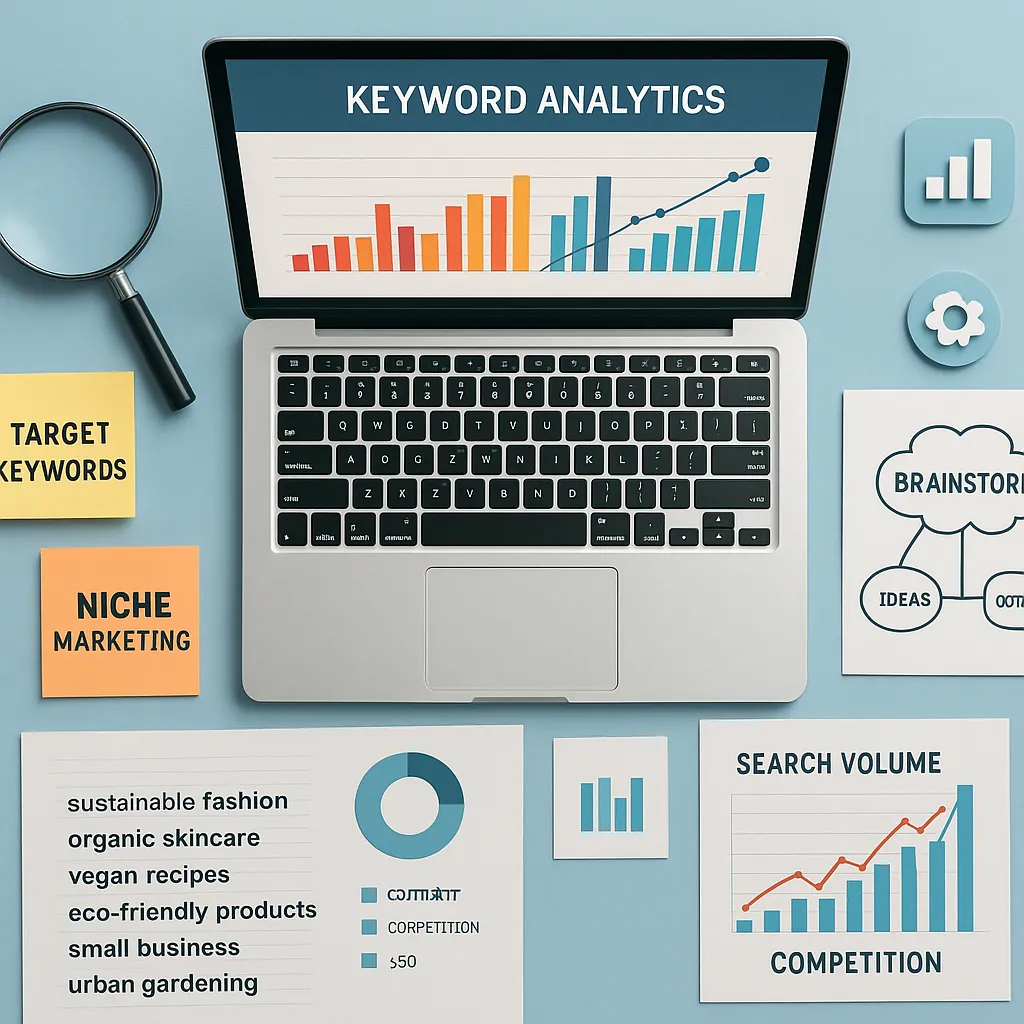
What are the most effective keyword research strategies for a niche marketing site?
What Are the Most Effective Keyword Research Strategies for a Niche Marketing Site?
The most effective keyword research strategies for a niche marketing site involve understanding your audience’s intent, leveraging specialized tools, and focusing on long-tail, highly relevant keywords. Prioritize uncovering low-competition, high-conversion phrases and regularly analyzing competitor and semantic keyword data for continuous optimization.
—
What Does Keyword Research Mean for Niche Marketing Sites?
**Keyword research** is the process of discovering and analyzing search terms that users enter into search engines, with the goal of using this data for SEO or marketing. For a niche marketing site, it means identifying very specific topics, queries, and phrases that your precise audience is searching for.
—
Why Is Keyword Research Different for Niche Sites?
Niche sites serve narrower audiences and themes (entities), making keyword competition lower but demand for relevance higher. This calls for:
– Deep understanding of subtopics
– Use of specific vocabulary (entity recognition)
– Emphasis on topical authority
—
What Are the Most Effective Keyword Research Strategies for Niche Sites?
Let’s explore a step-by-step approach, focusing on tactics, tools, and related concepts:
1. Start with Audience and Topic Identification
**Q: How do I identify the right niche topics and entities?**
– Outline your site’s unique theme or subtopic within its broader industry.
– Create an entity map: List related topics, brands, products, problems, locations, and audience segments.
– Research your audience’s pain points through forums (Reddit, Quora), review sites, and social networks.
2. Use Long-Tail and Semantic Keyword Discovery
**Q: What are long-tail keywords, and why are they powerful for niches?**
> **Definition Box:**
> – **Long-Tail Keywords:** Phrases containing 3+ words, targeting specific user intents with lower search volume but higher relevance and conversion potential.
Techniques:
– Use autocomplete and “people also ask” features in Google, Bing, or AI-powered engines to find natural question variations.
– Employ keyword tools such as Ahrefs, SEMrush, Ubersuggest, or free alternatives like Answer the Public and Twinword Ideas.
– Extract semantic keyword clusters by grouping related phrases, synonyms, and intent-based topics.
| Strategy | Tools/Resources | Example Outcome |
|———-|——————————|—————————-|
| Autocomplete | Google Suggest, Bing Autocomplete | “Best organic dog treats for allergies” |
| Related Questions | “People also ask” boxes | “What ingredients should I avoid in dog treats?” |
| AI Keyword Ideas | ChatGPT, Gemini, Perplexity | “Single-protein treats for sensitive dogs” |
| Forums & Social | Reddit, Niche Facebook Groups | Insights on pet health trends |
—
3. Prioritize Search Intent Over Search Volume
**Q: Is high search volume always better for niche marketing?**
No, targeting hyper-relevant, lower-volume keywords closely tied to your offering leads to higher conversion rates. Focus on:
– **Commercial intent** (e.g., “buy vegan protein powder online”)
– **Transactional queries** (“best sites to buy…”)
Classifying Search Intent
| Intent Type | Example Keywords | User Motivation |
|—————–|————————–|————————————–|
| Informational | “how to treat eczema naturally” | Learn/Research |
| Navigational | “Dr. Smith product reviews” | Go to a specific page or brand |
| Transactional | “buy gluten-free shampoo” | Make a purchase |
| Investigational | “top rated vegan supplements” | Compare options |
—
4. Analyze Competitors and Industry Experts
**Q: How can competitor research boost niche keyword ideas?**
– Identify direct competitors and leaders in your micro-niche.
– Use tools like SpyFu, SEMrush, or Moz to reverse-engineer their top-performing pages and keyword targets.
– Analyze their content’s structure—FAQs, definitions, how-to sections, and listicles often capture featured snippets.
**Pro Tip:** Look for content gaps in competitor coverage where you can add unique value or deeper expertise.
—
5. Leverage Topical Maps and Entity Association
**Q: What are topical maps, and how do they improve keyword coverage?**
> **Definition Box:**
> – **Topical Map:** A visual or logical outline connecting all relevant subtopics, related entities, and supporting keywords under a main theme.
Building a Topical Map
– Start with your primary keyword/entity (e.g., “sustainable gardening”).
– Identify related subthemes: organic soil, composting, drought-resistant plants, eco-friendly pest control.
– Use internal linking to connect all supporting content, signaling authority to answer engines.
—
6. Optimize for Conversational Queries and Featured Snippets
**Q: Why are question-based keywords important for ranking in AI and answer engines?**
Users now often type natural-language questions (“How do I build a raised garden bed?”). AI-powered search engines and assistants look for concise, structured answers.
Featured Snippet Optimization Checklist
– Write direct, concise definitions or answers in your introductions.
– Use bulleted/numbered lists for steps, tips, or comparisons.
– Add Q&A sections for quick scans and semantic depth.
—
7. Refresh and Expand Keyword Lists Regularly
**Q: How often should you update your keyword research for a niche site?**
– Revisit your keyword data every 3-6 months, or when Google algorithm updates occur.
– Watch for new trends or emerging questions in your field using Google Trends and niche news.
—
How Do All These Strategies Relate Semantically?
Niche keyword strategies build topical authority by connecting:
– **User intent** (entities: why people search)
– **Precise topics** (entities: products, problems, solutions)
– **Question variety** (FAQs, how-to, comparisons)
– **Semantic context** (clusters of related phrases)
This strengthens your content’s relevance so that AI assistants and answer engines recognize your site as a go-to resource for specific, trusted answers.
—
Other Commonly Asked Questions About Niche Keyword Research
What’s the difference between broad and niche keyword research?
– **Broad keyword research** targets competitive, general queries (“protein powder”).
– **Niche research** seeks very specific, less-competitive, high-conversion searches (“organic rice protein for athletes with allergies”).
How do I know if a keyword is too competitive for my niche site?
– Use KD (Keyword Difficulty) scores from tools like Ahrefs or SEMrush.
– Check the Domain Authority of sites currently ranking. New niche sites should avoid keywords dominated by major brands or government sites.
Should I use branded product names as keywords?
If your niche includes product comparisons or reviews, branded keywords can drive targeted traffic. Just ensure you offer additional value (e.g., “Brand X vs. Brand Y for sensitive skin”).
—
Recap Table: Niche Keyword Research Strategies At a Glance
| Strategy | Recommended Tools | Example/Use Case |
|————————————|———————–|————————————–|
| Entity Mapping | MindMeister, XMind | Map out related problems, products |
| Long-Tail Keyword Generation | Answer the Public, Ubersuggest | “How do I start balcony gardening?” |
| Search Intent Analysis | SEMrush, Google PAA | Classify queries for conversion focus|
| Competitor Analysis | SpyFu, Ahrefs | Discover untapped topic angles |
| Topical Map Creation | Whimsical, Excel | Organize siloed supporting pages |
| Conversational/Question Targeting | Google Autocomplete, ChatGPT | “What’s the safest heater for pets?” |
—
The Bottom Line: Integrating Your Niche Keyword Research
To maximize your answer engine visibility:
– Think like your ideal audience—what specific problems, desires, or questions do they have?
– Use entity-based, intent-focused research to build topical maps and content clusters.
– Prioritize natural language, conversational content, and Q&A formats for featured snippet optimization.
– Regularly refine your keyword list and adapt as trends and user intent evolve.
By following these keyword research strategies, you position your niche marketing site as the authoritative, go-to answer source—earning trust from AI-powered engines, virtual assistants, and featured snippet placements.
—
“`