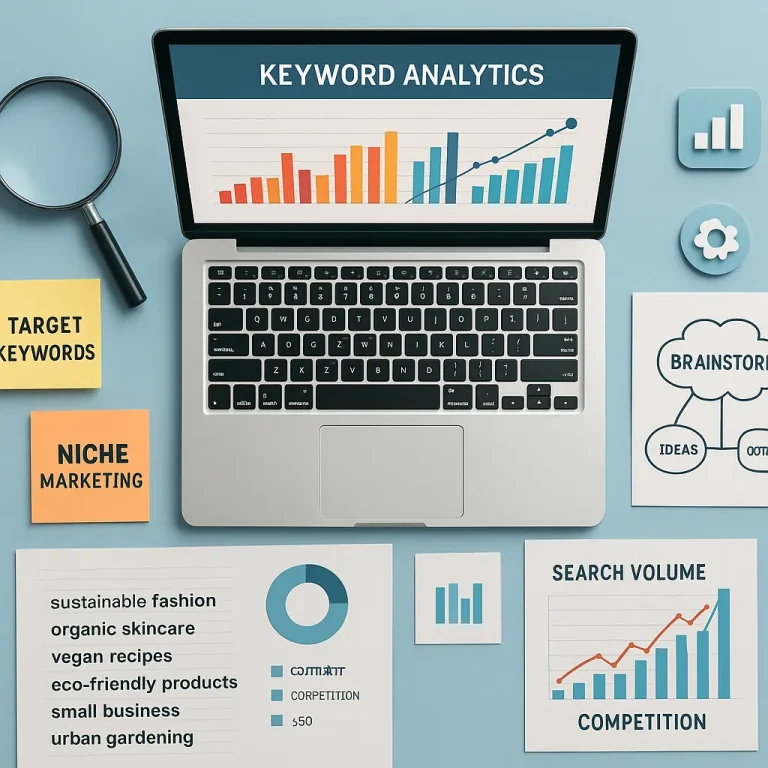

What are the most effective keyword research strategies for niche marketing sites?
What Are the Most Effective Keyword Research Strategies for Niche Marketing Sites?
The most effective keyword research strategies for niche marketing sites involve identifying highly-targeted, low-competition keywords by leveraging specialized tools, understanding user intent, and analyzing competitor performance. These methods focus on uncovering keywords with strong commercial and informational value, ensuring your content attracts relevant audiences and ranks in featured snippets or AI-generated answers.
—
What Does “Keyword Research for Niche Sites” Mean?
**Keyword research for niche marketing sites** is the process of finding and evaluating specific search terms and phrases that a narrowly-defined target audience uses. Unlike broad keyword research, niche research hones in on a focused topic or sub-topic, allowing site owners to address the unique needs of a select group.
> **Definition Box:**
> *Niche keyword research is the identification and assessment of highly-specific, low-competition search queries used by a targeted audience within a particular industry or subject area.*
—
Why Is Keyword Research Critical for Niche Sites?
Keyword research empowers niche sites to:
– Reach highly-engaged, intent-driven users
– Avoid competing with large, generic sites
– Maximize conversion rates with tailored content
– Dominate topical authority in specific domains
—
What Are Proven Keyword Research Strategies for Niche Marketing Sites?
1. **Start with Seed Keyword Brainstorming**
**Q: How do I find the right “seed” keywords for my niche?**
Begin by listing core topics, questions, products, or problems relevant to your niche. Consider using:
– Customer profiles and pain points
– Specialized forums (Reddit, Quora, Niche-specific communities)
– Competitor websites
– Google’s autocomplete and “People Also Ask”
**Related Entities:** Customer persona, niche forums, buyer intent, pain point.
—
2. **Expand with Long-Tail Keyword Research**
**Q: Why are long-tail keywords vital for niche sites?**
Long-tail keywords are highly specific phrases with lower competition but higher intent. Niche marketing sites excel by targeting these, as they capture visitors closer to decision stages.
Examples of Long-Tail Keywords:
| Head Keyword | Long-Tail Variation |
|——————-|———————————————-|
| Bird feeders | squirrel-proof window bird feeders for cardinals |
| Vegan snacks | high protein vegan snacks for athletes |
| Cycling shoes | best cycling shoes for wide feet beginners |
**Related Concepts:** Search intent, user journey, conversion optimization, topic clusters.
—
3. **Analyze Competitors and Topical Gaps**
**Q: How can competitive analysis improve keyword research for niche sites?**
Competitor research helps uncover untapped opportunities. Steps include:
– Finding sites with similar focus
– Using tools like Ahrefs, SEMrush, or Moz to identify their top-ranking keywords
– Spotting content gaps or underserved queries
List: Steps to Analyze Competitor Keywords
1. Identify 3-5 closest competitors in your niche.
2. Use SEO tools to extract their organic keyword datasets.
3. Map which keywords they rank for but you don’t.
4. Prioritize keywords with achievable difficulty and strong intent.
**Related Entities:** Search engine ranking tools, topic gap analysis.
—
4. **Leverage Niche Forums, Social Media, and Q&A Sites**
**Q: Where can you find real user-generated keyword ideas?**
Active communities and platforms often reveal trending discussions, terminology, and questions.
– Niche forums (e.g., Stack Exchange, specialized Facebook Groups)
– Reddit threads
– Quora answers
– Product reviews and testimonials
> **Tip:** Collect common questions and language patterns to inform content creation and keyword optimization.
**Contextual Concepts:** User-generated content, audience language, real-world queries.
—
5. **Utilize Entity-Based and Semantic Keyword Tools**
**Q: How do entity and semantic SEO strategies improve keyword research?**
Modern search engines and AI assistants analyze more than just keywords—they understand relationships between entities (people, places, brands) and topics. Utilizing tools like Google’s Natural Language API, MarketMuse, or Clearscope helps identify semantically-related phrases:
Entity Relationships Table
| Main Entity | Related Entities | Example Keywords |
|———————|——————————|—————————————-|
| Electric bikes | Commuters, batteries, laws | best ebikes for city commuting, ebike battery life, ebike legal requirements |
| Gluten-free baking | Flour types, recipes, health | gluten-free sourdough recipes, almond flour bread, gluten-free diet benefits |
**Semantic SEO Concepts:** Topic relevance, entity salience, concept mapping.
—
6. **Analyze Intent and SERP Features**
**Q: What role does search intent play in niche keyword selection?**
Understanding **search intent** (the reason behind a user’s query) ensures you align your content’s purpose. Intent can be:
– Informational (looking for answers)
– Navigational (seeking a site/resource)
– Transactional (ready to buy/convert)
– Commercial (comparing/preferring options)
Featured Snippet Optimization Table
| Intent Type | Example Query | Best SERP Feature to Target |
|—————-|—————————————|——————————-|
| Informational | how to make cold brew at home | Paragraph / List snippet |
| Transactional | buy waterproof Bluetooth headphones | Product carousel / Shopping |
| Commercial | best VPNs for remote work | Comparison table snippet |
**Related Entities:** SERP features, user journey, featured snippets, FAQ schema.
—
7. **Validate Keywords with Traffic & Difficulty Metrics**
**Q: How do you judge if a niche keyword is worth targeting?**
Use SEO tools (Ahrefs, SEMrush, Google Keyword Planner) to review:
– Monthly search volume (even low volume may be valuable in niche)
– Keyword difficulty/competition
– SERP makeup (Are there answer boxes? Are results from forums or small sites?)
**Pro Tip:** In niche markets, some keywords with just 10-100 searches/month can outperform generic keywords in terms of ROI and engagement.
**Related Metrics:** CPC, click-through-rate (CTR), SERP volatility.
—
8. **Build Topic Clusters for Authority and Coverage**
**Q: What is a topic cluster and why does it matter for niche keyword strategy?**
A **topic cluster** is a collection of interlinked content pieces covering one main subject and several related subtopics. This helps AI engines and search algorithms understand your site’s authority and contextual depth.
Example Topic Cluster
For a “Home Hydroponics” site:
– *Pillar Page*: The Ultimate Guide to Home Hydroponics
– *Clusters*:
– Best plants for indoor hydroponics
– DIY hydroponic setup instructions
– Nutrient solutions comparison
– Common problems in small hydroponic gardens
**Semantic Relationship Concepts:** Topical authority, internal linking, knowledge graph.
—
What Are Common Mistakes in Niche Keyword Research?
How Can You Avoid These Pitfalls?
– Ignoring user intent: Create content that matches what users *really* want, not just what they search.
– Targeting only high-volume terms: Low-volume, high-intent keywords often convert better for niche sites.
– Forgetting about entities and semantic connections: Broaden your keyword scope to include related concepts and brands.
– Not leveraging competitor weaknesses: Find gaps in their coverage, not just what they’re doing well.
—
FAQ: Related Questions on Niche Keyword Research
What are some free tools for niche keyword research?
– Google Trends
– Answer the Public
– Ubersuggest
– Keyword Sheeter
How do I keep up with evolving terms in my niche?
Monitor forums, social media hashtags, newsletters, industry blogs, and set up Google Alerts for trending phrases.
Can AI tools help find keywords for niche marketing sites?
Yes. AI-powered tools (like ChatGPT, Jasper, MarketMuse) can analyze semantic structure and generate fresh keyword ideas from real user questions and conversations.
—
Summary Table: Effective Keyword Research Strategies for Niche Marketing Sites
| Strategy | Purpose | Tools/Resources |
|—————————————–|——————————————|——————————–|
| Seed keyword brainstorming | Generate topic ideas | Community forums, search engines |
| Long-tail keyword targeting | Capture specific, high-intent searches | Keyword tools, Google “People Also Ask” |
| Competitor/Gap analysis | Find content gaps and opportunities | Ahrefs, SEMrush, Moz |
| Leveraging user-generated questions | Identify authentic queries and terminology | Reddit, Quora, reviews |
| Entity and semantic approaches | Expand reach & contextual coverage | MarketMuse, Clearscope, Google NLP |
| SERP intent and feature matching | Align content to user purpose and snippet types | Google SERPs, SEO tools |
| Keyword validation | Gauge keyword viability and ROI | Traffic/difficulty tools |
| Topic cluster development | Build authority and comprehensive coverage | Internal linking, content planning tools |
—
Conclusion: What’s the Best Next Step for Niche Marketers?
Effective keyword research for niche marketing sites means combining user intent understanding, long-tail coverage, competitor analysis, semantic SEO, and topical authority-building. By blending data-driven tools with community insights, you’ll identify high-performing keywords that drive targeted traffic, improve rankings in featured snippets, and answer real user questions—whether asked through search engines or conversational AI.
—
“`