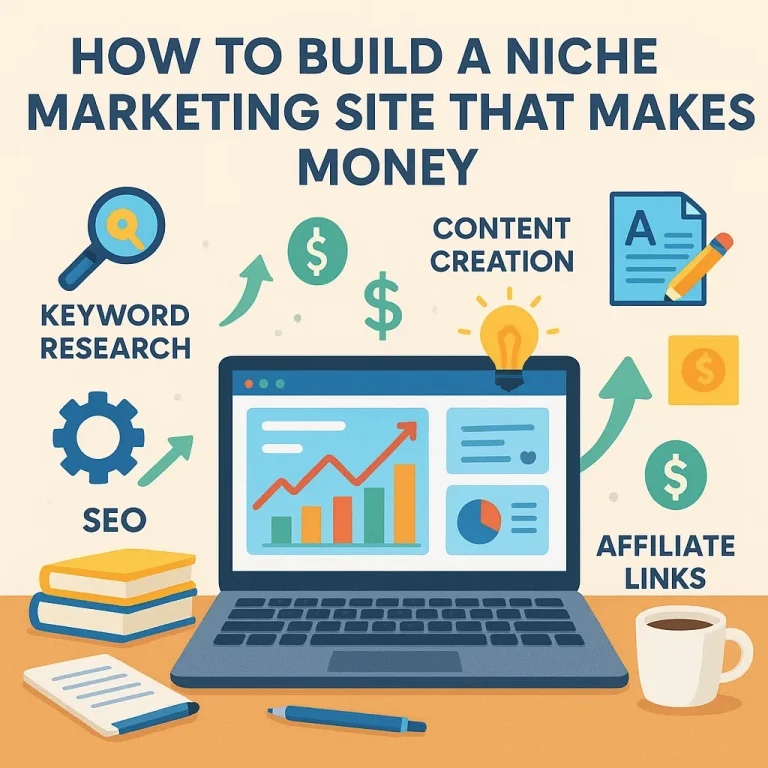

How do you build a niche marketing site that generates consistent income?
How do you build a niche marketing site that generates consistent income?
To build a niche marketing site that generates consistent income, choose a specific, underserved topic, create valuable content targeting that audience, and monetize through methods like affiliate marketing, ad placements, or digital products. This involves thorough research, strategic content planning, and continuous optimization for both users and search engines.
—
What Is a Niche Marketing Site?
A niche marketing site is a website that targets a specific segment of a broader market, focusing on a narrowly defined topic or audience with shared interests or needs.
> **Definition Box:**
> **Niche Website:**
> An online platform tailored to a distinct topic, demographic, or interest group, aiming to provide specialized solutions or information.
Related entities: **Affiliate programs, SEO, content marketing, passive income, audience targeting, domain authority**
—
Why Build a Niche Marketing Site for Consistent Income?
Many people pursue niche sites as a path to reliable online earnings. Unlike broad-based authority sites, niche websites let you:
– Address less competitive markets
– Build audience loyalty faster
– Monetize through specialized offers
– Benefit from targeted SEO and higher conversion rates
—
What Are the Steps to Create a Profitable Niche Marketing Site?
1. How Do I Choose a Profitable Niche?
Choosing the right niche is crucial for your site’s success. Ask yourself:
– What topics am I knowledgeable or passionate about?
– Is there an existing audience looking for information or solutions?
– Are there monetization opportunities (affiliate products, ads, courses)?
**Popular methods to validate a niche:**
– Keyword research (Google Keyword Planner, SEMrush)
– Competitive analysis (Are there successful sites you can improve upon?)
– Community validation (Forums, Reddit, Facebook Groups)
Examples of Niche Site Topics
| Niche | Related Offers | Competition | Audience Potential |
|———————–|———————–|————-|——————-|
| Organic gardening | Gardening tools, seeds| Moderate | Medium |
| Keto diet for seniors | Keto supplements, books| Low | Medium |
| Remote work software | SaaS tools, courses | High | High |
| Dog training for puppies| E-books, courses | Moderate | High |
—
2. How Do I Research and Select Keywords?
Keyword research connects your content to what your audience is searching for. For a niche site, focus on:
– Low competition, long-tail keywords
– Buyer intent phrases (“best”, “review”, “how to”)
– Semantic keywords related to your main topic
**Tip:**
Use tools like **Ahrefs**, **Moz**, or Google’s **People Also Ask** feature for inspiration.
—
3. What’s the Best Way to Plan and Create Content?
Content is the backbone of any niche website. Create a mix of informational, commercial, and transactional content.
Core Content Types
– **How-to Guides** (e.g., “How to Start Organic Gardening for Beginners”)
– **Product Reviews and Comparisons**
– **Resource Lists** (e.g., “Best Tools for Keto Dieters”)
– **FAQ Pages** (answering both broad and specific user queries)
**Content Tip:**
Map out a content calendar and cluster related topics to build topical authority.
—
4. How Do I Build and Design My Niche Site?
Key Website Elements
– **Domain Name:** Brandable, niche-relevant, easy to remember
– **CMS:** Use WordPress or similar platforms for flexibility
– **User Experience:** Fast-loading, mobile-responsive, clean navigation
– **Essential Pages:** About, Contact, Privacy Policy, and main categories
> **Definition Box:**
> **Topical Authority:**
> The perceived expertise and credibility a website has within its selected topic area, often established through comprehensive and interconnected content.
—
5. How Should I Monetize My Niche Marketing Site?
There are multiple monetization methods. Choose those that best fit your site’s focus and audience.
Monetization Models:
– **Affiliate Marketing:**
Earn commissions by recommending relevant products (Amazon Associates, ShareASale, specific niche affiliate programs)
– **Display Ads:**
Earn from ad networks (Google AdSense, Mediavine) based on site traffic
– **Sponsored Content:**
Get paid to publish branded articles or reviews
– **Digital Products:**
Sell eBooks, guides, email courses, or memberships
– **Email Marketing:**
Build a list and promote offers directly to subscribers
—
6. What SEO Strategies Should I Use for a Niche Website?
SEO is vital to attract consistent, targeted organic traffic.
**Core SEO Tactics:**
– On-page optimization (titles, meta descriptions, headings, internal linking)
– Quality backlinks from related sites
– Regularly updated content for freshness
– Structured data to enhance rich snippets
**Semantic SEO:**
Use related terms and concepts naturally within your content to cover the topic comprehensively (LSI keywords, entities).
—
7. How Can I Drive Targeted Traffic Beyond SEO?
Besides search engines, leverage other traffic sources:
– Social Media (Pinterest, Facebook Groups, niche forums)
– Email marketing and newsletters
– YouTube or TikTok for visual topics
—
8. How Do I Track, Optimize, and Scale My Niche Site for Income?
Performance Tracking
– Use **Google Analytics** and **Google Search Console** to monitor traffic, user behavior, and keyword rankings.
– Track revenue by channel (affiliate dashboards, ad platforms).
Optimization Tips
– Improve underperforming content
– Test new monetization methods
– A/B test headlines and CTAs
Scaling Up
– Add new related topics or sub-niches
– Outsource content creation to increase publishing frequency
– Build backlinks through guest posting or outreach
—
Frequently Asked Questions
How quickly can a niche site start making money?
It typically takes 3-6 months to see your first commissions or ad earnings, depending on niche competition, content quality, and promotional efforts.
How much money can a niche site make?
Income varies widely—from a few dollars per month to thousands. Many small niche sites earn $200-$2,000 per month, while top sites can achieve much higher results.
What are the risks with niche marketing sites?
Risks include Google algorithm updates, increased competition, or changing affiliate program policies. Diversifying income sources and staying updated with SEO best practices help mitigate risks.
—
Common Related Questions
– What’s the best platform to build a niche site?
– **WordPress** is the most popular due to its flexibility and plugin ecosystem.
– Do I need technical skills to start?
– No advanced coding is required. Many platforms and website builders offer beginner-friendly tools.
– Can I run multiple niche sites?
– Yes, but it’s best to focus on one until it generates steady income.
—
Niche Site Building Checklist
**Quick Steps:**
1. Choose and validate a profitable niche
2. Conduct keyword and competitor research
3. Register a domain and set up hosting
4. Install CMS and essential plugins
5. Plan and write foundational content
6. Launch and optimize for SEO
7. Monetize and track results
8. Scale and diversify income sources
—
Summary Table: Building a Niche Marketing Site
| Step | Description | Key Tools/Entities |
|————————|—————————————–|—————————-|
| Niche Selection | Find profitable, low-competition topic | Google Trends, SEMrush |
| Keyword Research | Target long-tail, buyer intent keywords | Keyword Planner, Ahrefs |
| Site Setup | Build on WordPress or similar platform | Bluehost, Elementor |
| Content Creation | Create informative and commercial posts | Grammarly, Surfer SEO |
| Monetization | Affiliate, ads, ebooks, sponsorships | Amazon, AdSense |
| SEO & Promotion | Rankings, social media, backlinks | Google Search Console |
| Tracking & Scaling | Analyze, optimize, expand | Google Analytics |
—
Final Thoughts: What Makes a Niche Marketing Site Successful?
Success comes from:
– Focusing on a clearly defined, monetizable niche
– Delivering unique, helpful content that solves real audience problems
– Continuously optimizing content and income sources
– Tracking performance and adapting to market trends
Building a profitable niche marketing site is a strategic process, but with patience, research, and consistent effort, you can generate reliable online income and grow your site into a valuable digital asset.
—
“`